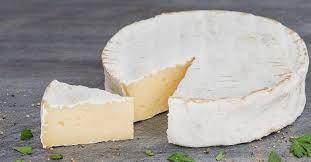
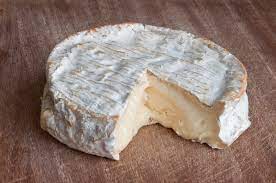
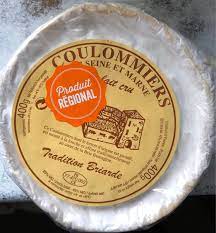
The commune of Coulommiers, located in the department of Seine-et-Marne (Île-de-France region), has been known since the Middle Ages for its production of soft cheeses with a bloomy rind made from raw cow’s milk. .
The name Coulommiers remains inextricably linked to one of the jewels of French cheese heritage, Coulommiers, sometimes also called “Petit Brie de Coulommiers”. Emblematic representative of the authentic French gastronomic land, Columery cheese production has therefore become the center of gravity as much of important economic interests - especially local ones - as of the fight to safeguard this heritage.
Map of France in 1180 with the County of Champagne. Since the Middle Ages, cheeses that are not yet referred to as “bries” have been made in the Comté de Brie (a historical entity associated with the Comté de Champagne) in much the same way. There are then as many cheeses as there are farms in terms of shape and weight. These cheeses - called Brie by reference to the homonymous region are originally a popular dish consumed mainly by agricultural workers, called to move from farm to farm over long distances for several months of the year.
The Champagne and Brienote fairs, important commercial events in the medieval economic context and represented in Coulommiers by those of Saint-Denys and Sainte-Foy, help to publicize the local productions, which are soon to be found on the tables of the lords of the surroundings, if not of the great dignitaries of the kingdom: King Philippe Auguste gives them as a reward to the members of his court and Charles d’Orléans, Lord of Brie-Comte-Robert, does not act otherwise and orders “twenty dozen of cheeses from the country of Brye (…) to be given to the ladies at the next estrennes ”. Since Briard cheeses are considered to have curative properties, some are offered to mites and plague sufferers5. However, during their wanderings, large Bries (sometimes with a diameter of over 40 centimeters) often prove to be fragile. For reasons of conservation as well as handling / transport, we develop a slightly smaller cheese: thus a first venerable ancestor “coulommiers” is born which gradually acquires its letters of nobility at the same time as its own specificity. (extract from Wikipedia)
At the start of the 19th century, we spoke of “Coulommiers cheese” and then quite simply of “Coulommiers” for cheese productions that had few characteristics in common with the cheeses that are found on the market today. Sometimes still large in diameter and weight, their rennet content appears to be higher8. During their maturation period, they become covered with a mantle of mold in shades ranging from brown to dark green, which must be removed before tasting9. The introduction of a microscopic fungus called Penicillium Candidum revolutionized the manufacture of columérien cheese, giving it over time its current characteristics. From 1872, Brie and Coulommiers were recorded in a differentiated way. During the second half of the century, the “Petit Coulommiers” really took off after its presentation at the Universal Exhibition of 1878.
The formats of cheese production were only “standardized” during the 19th century and we then found ourselves with two presentations of this cheese which differ only in size - difference in diameter of more or less 5 centimeters between the two versions. , same thickness of about 3 centimeters - but not by characteristics (same manufacturing process). The two were considered for a time as “true coulommiers” before we tried to differentiate them more or less artificially for strictly commercial reasons: we then speak of coulommiers or “petit-brie” for the small model and “ Brie de Coulommiers ”or“ Coulommiers Farmer ”for the large model.