In 2018, this cheese is largely manufactured in industrial dairies (only one original farm production remains). Chilled raw cow’s milk purchased from farmers by this industry is often pasteurized before processing. Raw or pasteurized, the milk is mixed with Penicillium roqueforti or glaucum, which will be at the origin of the blue, then renneted. Pasteurized milk, devoid of the great diversity of the native microbiota of raw milk, will be reseeded with a restricted flora of cultured microorganisms. The curd, once sliced and drained, is gently stirred to “cap the grain”, that is, to start draining at each grain of the curd. It is then placed in molds where it finishes its draining. Then comes the salting step, which is carried out in two stages: we deposit, on the sides of the cheese and then on the heel, salt which gradually penetrates inside the dough2.
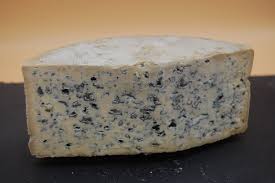
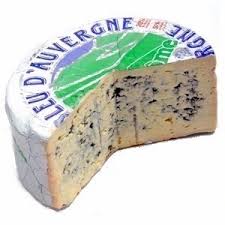
To develop, blue needs oxygen; This is why Bleu d’Auvergne is pricked with needles when entering the cellar to promote ventilation to the heart. In 2018, the knitting needles of the past have long since given way to mechanical stitching, which allows for homogeneous marbling and above all a satisfactory processing yield.
For a minimum of four weeks, the fourmes are finally matured in cool and damp cellars, with the aim of acquiring, over the days, smoothness and taste. (extract from Wikipedia)